
At this time of year, through the shiny consumerism, at least some people catch a glimpse of the story of the birth of baby Jesus in Bethlehem. We know Joseph and Mary had to travel there for a Census, but the full meaning of the story is largely lost.
The King James Version may not benefit from modern linguistics & biblical interpretive techniques, but it understood the politics of the story:
Luke 2: 1-3 And it came to pass in those days, that there went out a decree from Caesar Augustus that all the world should be taxed.
2 (And this taxing was first made when Cyrenius was governor of Syria.)
3 And all went to be taxed, every one into his own city.
The world Jesus was born into was one where the tax system took from the poor and the weak and gave to the rich. Taking a Census of the entire population meant the Roman system could tax down to the family unit. Taxes paid for the military occupying force that enforced the tax system and, to be fair, developed highways and aqueducts that enhanced trade across the mediterranean. But they also transferred wealth and property from the poor to the elites.
Here in Sydney, New South Wales, Australia, our state and national governments use tax policy to shape a variety of our realities. Wage earners pay taxes which support the building of infrastructure and provide community services to the needy – but the truly wealthy don’t pay a similar proportion of their income.
Two millenia after the story of Jesus, we still have a tax system that takes from the poor and gives to the rich. Two examples include our Government’s addiction to the lucrative taxes on gambling and various tax subsidies (e.g. negative gearing) for landlords that enhance their capacity to buy property and increase their power over tenants. NSW has more than a third of the world’s non-Casino poker machines – which are one of the most harmful forms of gambling – and in Australia 25% of rental properties are owned by just one percent of people.
Yet Christians have spent much of the last 1500 years reframing the story of Jesus as one of a baby saviour born to bring hope for the forgiveness of sins, and then imaging those sins to be primarily moral in nature. As Will Ferrell hilariously demonstrates, the 8lb 6oz baby Jesus is cute, has no words, cannot ask anything of us, but gives us what we want.
Over the centuries, Christian leaders have de-emphasised the political and economic aspects of the ‘good news about Jesus’.For many modern day Christians, the Jesus story is about individuals being saved and going to heaven when they die, rather than an invitation to join the disciple community and get to work saving the world from injustice.
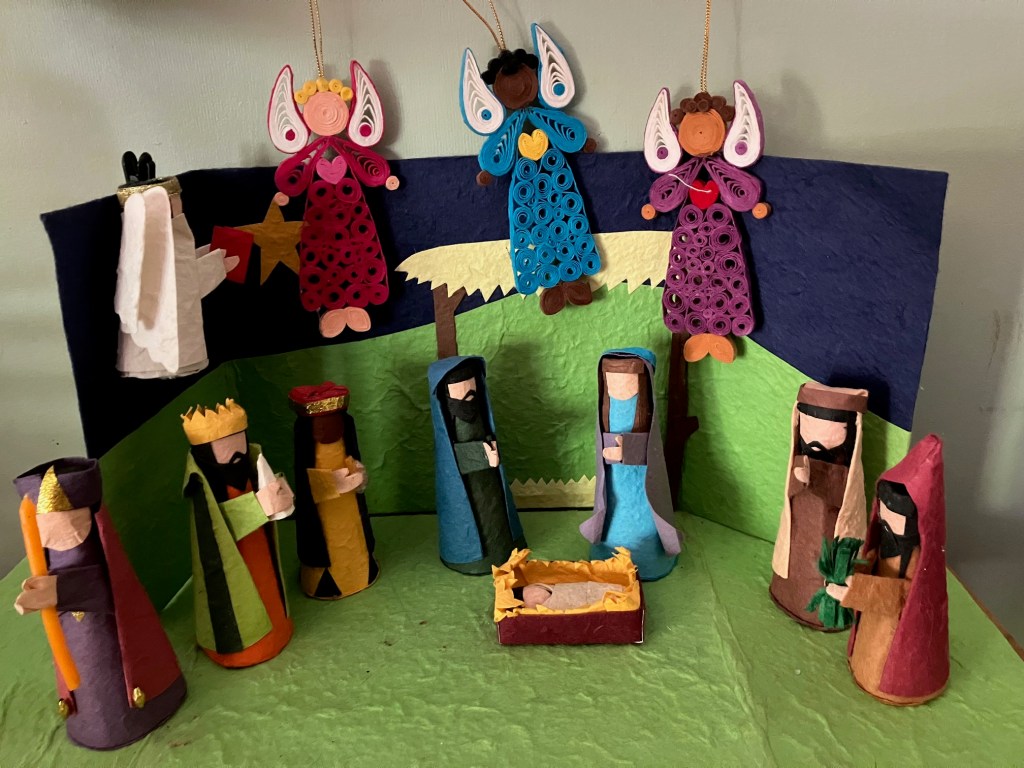
But the cute, unthreatening, untimidating and undemanding baby Jesus contrasts with both the Angels – who’s first words to the terrified shepherds are “Fear Not” – and the impolite John the Baptist who appears in the next chapter.
John is active two or three decades after the birth of Jesus, so the Roman tax system is now well established. He brought a “baptism of repentance for the forgiveness of sins”. The types of sins John believed required forgiveness are clear from the text:
- those with “two shirts should share with the one who has none, and anyone who has food should do the same”;
- tax collectors should not “collect more than you are required to”;
- and soldiers should not “extort money and … accuse people falsely”.
Three types of people are reported coming to John the Baptist for forgiveness of sins. The general public, the tax collectors who collaborated with the Roman tax system to take from the poor, and the soldiers who enforced the Roman tax system. The ‘sins’ that John the Baptist forgives are primarily about greed and opportunistic exploitation rather than the moral failings imagined by modern day middle-class Christians.
Tax collectors appear repeatedley through the gospels. They were hated collaborators who might at times have been targeted for assassination, particularly by the Zealots – an activist anti-Roman sect. Jesus had both a Zealot and a tax collector amongst his disciples.
Jesus was opposed to violent oppression, but in ‘turning the tables’ and teaching his followers to ‘turn the other cheek’ – an assertive but peaceful strategy to oppose oppression, we can see that part of the good news about Jesus is that he calls the powers of oppression to account and seeks to free the marginalised from bondage.
At Christmas time, perhaps we need to be getting a bit more political and justice focused, rather than drifting along with our systems of consumerism and exploitation. As Jesus announced in Luke Chapter 4:
16 He went to Nazareth, where he had been brought up, and on the Sabbath day he went into the synagogue, as was his custom. He stood up to read, 17 and the scroll of the prophet Isaiah was handed to him. Unrolling it, he found the place where it is written:
18 “The Spirit of the Lord is on me,
because he has anointed me
to proclaim good news to the poor.
He has sent me to proclaim freedom for the prisoners
and recovery of sight for the blind,
to set the oppressed free,
19 to proclaim the year of the Lord’s favour.

 Glen B Powell Music